European Commission publishes new guidelines on valorising multidisciplinary research results
15/09/2026
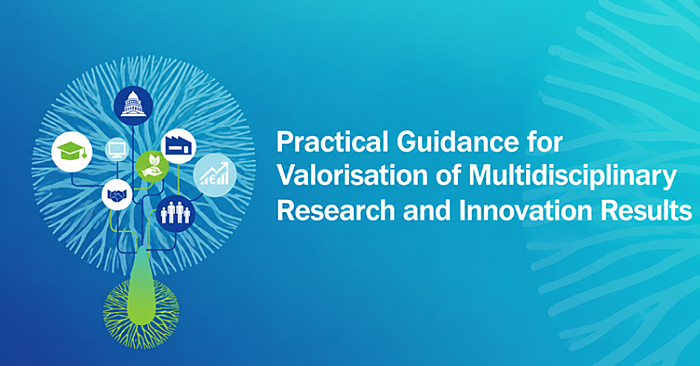
The new guidelines are aimed at researchers and other owners of research results, as well as universities, research organisations and knowledge valorisation actors such as Knowledge Transfer Offices (KTOs). They are designed to help identify suitable ways of turning results from multidisciplinary research and innovation projects into tangible impact beyond the research itself.
In doing so, the European Commission addresses a central objective of its European Knowledge Valorisation policy: research results should not only advance scientific knowledge but also create value for society and the economy, for example by contributing to new products, services, policies or other innovative solutions.
Ten pathways from research results to impact
The publication presents ten different valorisation pathways illustrating how multidisciplinary research results can be translated into practical applications and impact – for example through human-centred technology, participatory innovation, entrepreneurship, organisational change or evidence-informed policymaking.
The guidelines also support research and innovation projects in identifying relevant users, partners and intermediaries and in strategically planning the next steps towards valorisation. Practical examples and checklists are provided to facilitate implementation.
Decision trees help identify suitable valorisation pathways
A key feature of the new guidelines is the inclusion of two interactive decision trees. The first starts with the research results already achieved and helps users identify suitable forms of valorisation. The second takes the desired impact as its starting point.
Researchers and project consortia can therefore systematically assess which valorisation pathways best match their results and objectives and which stakeholders should be involved in the next steps.
Strengthening the role of Social Sciences and Humanities in knowledge valorisation
The guidelines are particularly relevant for multidisciplinary projects involving the Social Sciences and Humanities (SSH). Existing valorisation approaches have often focused more strongly on science- and technology-based research and established technology transfer pathways. Multidisciplinary and SSH research, however, may require different approaches to translate results into practical use and impact.
Social Sciences and Humanities can make an important contribution to innovation by providing insights into areas such as human behaviour, societal needs, cultural contexts and social change. Combined with technological research, these perspectives can contribute to more human-centred, inclusive and socially relevant innovations.
The new guidelines form part of the European Commission's broader activities on Knowledge Valorisation and support efforts to strengthen the uptake and use of multidisciplinary research and innovation results across the European Research Area.

Competence Centre for Research and Innovation Funding in Bavaria, Europe and the World
Competence Centre for Research and Innovation Funding in Bavaria, Europe and the World